News - Construction News
Lower Thames Crossing sees progress
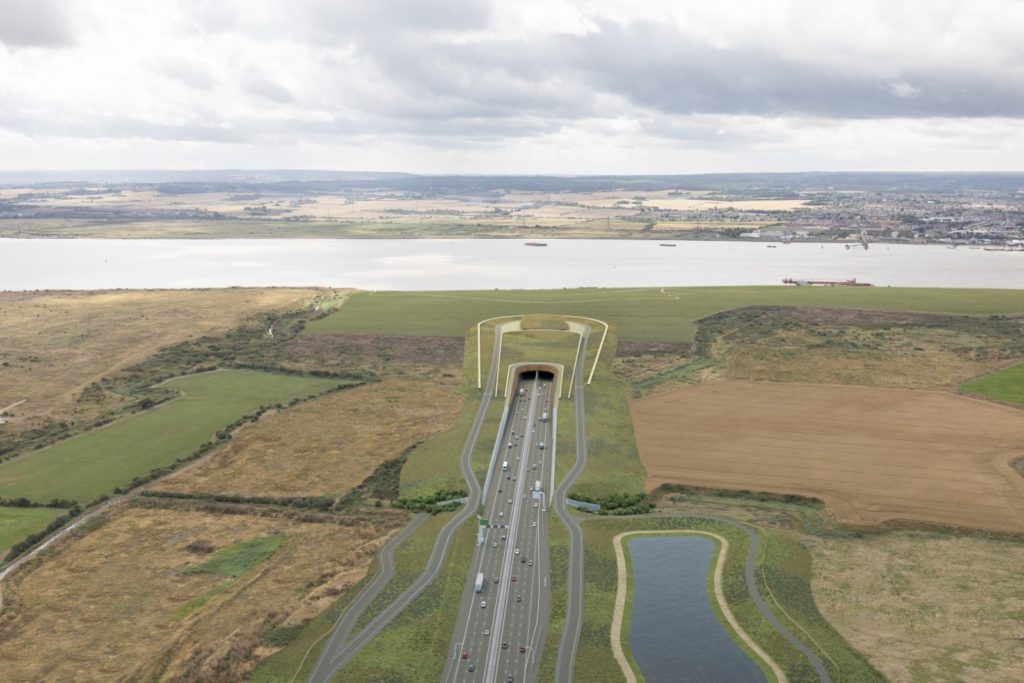
National Highways has officially commenced the procurement process for one of the world’s largest tunnel boring machines, marking a significant advancement for the Lower Thames Crossing following the allocation of £891 million in government funding.
This capital injection, confirmed in last year’s Budget, establishes the financial foundation for the project and is intended to catalyse billions of pounds in subsequent private sector investment to facilitate the remaining construction phases. The development signals an immediate opening for the UK construction supply chain, as the project’s tunnelling partner, the Bouygues Travaux Publics Murphy Joint Venture, is now actively inviting tenders from prospective suppliers capable of engineering a machine of unprecedented scale.
The technical requirements for the tunnel boring machine are substantial, with the specification calling for a diameter of 16.4 metres. This will enable the excavation of one of the widest tunnels globally, accommodating three lanes of traffic in each direction. At over four kilometres in length and reaching depths of 60 metres beneath the River Thames, the structure will represent the longest road tunnel in the United Kingdom. National Highways has adopted a strategic low-carbon delivery model that utilises a single machine to excavate both the northbound and southbound tunnels, a decision aimed at optimising cost efficiency without extending the construction timeline.
Subcontractors and suppliers should note the phased timeline for these works. The procurement of the machine is scheduled for completion in 2026, with excavation operations set to begin in 2028. However, onsite opportunities will emerge sooner, with construction on the northern tunnel entrance near Tilbury docks slated to commence in the summer of 2026. This phase involves the creation of a 110-metre long, 26-metre deep structure and the establishment of an onsite factory for the production of concrete segments. Beyond the primary tunnelling works, the project involves extensive preparatory requirements, including utility diversions, archaeological surveys, and the creation of approximately 40 miles of new pathways and two major public parks.
Positioned as Britain’s first carbon-neutral major infrastructure project, the Lower Thames Crossing offers a critical entry point for firms specialising in sustainable construction and environmental mitigation. The scheme’s design integrates excavated material into landscape architecture, such as the Tilbury Fields park, while protecting local habitats and minimising noise through embankments and cuttings. With planning permission secured in March 2025 and a projected opening in the early 2030s, the project represents a sustained pipeline of work for the infrastructure sector, aiming to alleviate congestion at the Dartford Crossing and improve logistical connectivity between the southeast ports, the Midlands, and northern England.
If you would like to read more stories like this, then please click here






More News
- Electric Vehicle Infrastructure (EVI) Support Service
12 Mar 26
The Department for Transport has officially unveiled the Electric Vehicle Infrastructure (EVI) Support Service.
- £27Bn Social and Affordable Homes Programme fund opened
11 Mar 26
Homes England has formally initiated the bidding process for its Social and Affordable Homes Programme
- North Hykeham Relief Road to unlock housing investment
10 Mar 26
North Hykeham Relief Road marks an essential advance for infrastructure and economic development across Lincoln