News - Construction News
MPs Call for End to Rail Investment ‘Boom and Bust’
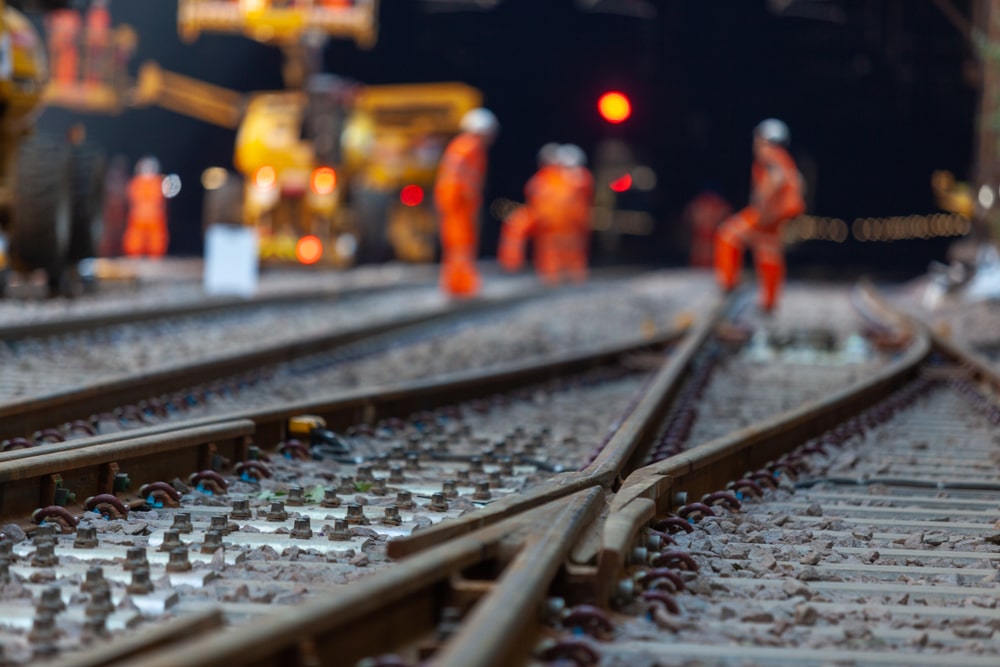
Transport Committee report highlights damaging uncertainty for construction sector, with industry experiencing worst conditions in years.
The UK’s rail construction and infrastructure supply chain is facing a critical period of uncertainty, with MPs warning that decades of ‘boom and bust’ investment cycles are threatening the viability of employers and delaying essential network improvements.
A comprehensive report published by the House of Commons Transport Committee calls for a radical overhaul of rail investment planning, arguing that the creation of Great British Railways presents a ‘golden opportunity’ to establish the long-term certainty desperately needed by the construction sector.
Supply Chain Under Severe Pressure
The inquiry received evidence from over 50 stakeholders, painting a stark picture of current conditions. A November 2025 poll of rail business leaders found that 64% expect sector contraction, while 85% anticipate work hiatuses – conditions described by industry representatives as the worst in several years.
The Railway Industry Association (RIA) reported that years of fluctuating investment have created widespread inefficiencies, job losses, and weak investment incentives across the £42.9 billion sector, which supports 710,000 jobs and generates £14.1 billion in tax revenues.
Evidence submitted to the committee highlighted the severe impact on companies of all sizes. Alstom warned that 2,000 of its staff – plus many more in the supply chain – were ‘put at serious risk’ during the 2023 crisis at its Derby Litchurch Lane manufacturing site, noting that ‘no one in government had appeared to see the problem coming.’
Quantifying the Cost of Uncertainty
The committee’s findings reveal significant financial penalties from uneven investment patterns. The National Skills Academy for Rail estimated that current workforce planning methods could increase project costs by 7.25%, while rail electrification costs were found to be approximately one-third lower when steady investment is maintained.
The report contrasts Britain’s highly variable approach with Germany’s consistent annual electrification of 200 kilometres, which delivers better value and stability. UK electrification has suffered from irregular investment since 1990, with a two-decade gap before the Control Period 5 programme.
AtkinsRéalis warned of an upcoming skills shortage, stating that ‘constant boom and bust cycles lead to redundancy, which discourages early careers from choosing this industry as their first option.’
Rolling Stock Procurement Particularly Acute
The committee found the ‘boom and bust’ characterisation ‘particularly valid’ for rolling stock procurement. More than 8,000 vehicles – representing half the current national fleet – were ordered between 2010 and 2018, followed by a significant downturn that has created order gaps of up to 24 months extending to 2030.
Specific procurement delays and scope changes were documented for TransPennine Express, Southeastern, East West Rail and Northern Trains, with the Rail Forum reporting that franchising had ‘driven cyclical investment’ requiring ministerial approval from both the Department for Transport and Treasury, causing repeated hiatuses.
27 Recommendations for Supply Chain Stability
The committee made 27 recommendations across four main areas, all aimed at providing the certainty required for effective supply chain planning and investment:
Control Period Reform
The committee called for an independent review of Control Period 7’s start compared to previous periods, examining spend volatility and whether smoother workflow is achievable. Network Rail’s £3.5 billion annual renewals budget has shown uneven spending profiles, with significant disruption reported at CP7’s launch.
Rail Network Enhancements Pipeline
The RNEP, launched in 2018 but not updated since October 2019, should be revamped and updated annually. It should provide five years’ certainty on a rolling basis with indicative pipelines extending to 15 years, clearly stating funding commitments and sources. The latest Spending Review confirmed funding for several 2019 RNEP projects but added no new schemes, while cancelling or pausing Phase 3 of Midland Main Line electrification and Phase 5 of the South West Rail Resilience Programme.
Rolling Stock Strategy
The committee welcomed the government’s commitment to publish a rolling stock strategy in 2026 but emphasised this must be aligned with infrastructure pipelines and developed collaboratively with industry. Within two years, the Department for Transport and Great British Railways should define standard train families to limit the proliferation of rolling stock types, achieving better value and an improved passenger experience including more widespread level boarding.
Long-Term Rail Strategy
The Railways Bill should mandate a Long-Term Rail Strategy covering at least 30 years with firm objectives on electrification, rolling stock, accessibility and capacity. This should include commitments to major programmes like Northern Powerhouse Rail and require parliamentary scrutiny for significant amendments.
Great British Railways Needs Protected Autonomy
While the establishment of Great British Railways was widely supported as addressing fragmentation, the committee warned that GBR must have sufficient autonomy in enhancements planning to avoid micromanagement that could jeopardise investment pipelines.
The report states that the Railways Bill provides only a ‘partial picture’ of how the new rail regime will operate, with key policies, processes and decisions still awaited. The committee called for the Department for Transport to publish a comprehensive list with target dates of all decisions, key documents and planned consultations leading to GBR’s establishment.
Crucially, MPs warned that Clause 7 as currently drafted would permit a future Secretary of State to micromanage GBR through directions, and recommended that the legislation be strengthened to reflect the current government’s intention that such powers only be used sparingly.
Industry Response: ‘Damaging Uncertainty Must End’
Railway Industry Association Chief Executive Darren Caplan said: ‘RIA has been arguing for a clear and visible pipeline of work to be published ever since the Rail Network Enhancements Pipeline was launched in 2019, so we welcome the Select Committee’s recognition of the “damaging uncertainty” this has caused to the UK rail supply chain and the need for clarity to plan and invest.’
Sam Gould, Director of Policy and External Affairs at the Institution of Civil Engineers, welcomed the emphasis on long-term pipelines, adding: ‘Clarity about what’s going to happen and when is essential to guide the industry. Without a clear picture to work with, it’s difficult to do effective workforce planning, which impacts delivery.’
Committee Chair Ruth Cadbury said: ‘What is clear is that we must get past the damaging boom and bust cycles outlined in our report about the pipeline of rail investment, with a radical new approach to certainty of spending on the railways. The advent of Great British Railways is a golden opportunity to get this moving.’
Implications for Construction Supply Chain
The report’s findings have significant implications for the entire construction and infrastructure supply chain. Steady, carefully sequenced and clearly communicated spending is essential for:
- Enabling suppliers to plan workforce requirements and retain specialised skills
- Reducing overall project costs through efficient resource allocation
- Encouraging private sector investment by providing credible long-term pipelines
- Supporting SMEs to make investment decisions with confidence
- Attracting early-career professionals to the rail infrastructure sector
With Network Rail’s asset base valued at £490.4 billion as of March 2025, the scale of opportunity for the construction sector is substantial—but only if the investment certainty exists to support sustainable business models and workforce development.
About the Report
The Transport Committee’s ‘Rail Investment Pipelines: Ending Boom and Bust’ inquiry examined how planned, steady pipelines of projects could benefit railway development by enabling the rail supply industry to plan ahead, giving confidence to investors and potentially reducing costs.
The committee heard evidence from rolling stock manufacturers including Alstom and Siemens, Network Rail, the Railway Industry Association, trade unions, devolved authorities, and infrastructure contractors during sessions held between May and June 2025.
If you would like to read more stories like this, then please click here
Related Articles
 McCann drives environmental improvements
 Get with the programme – Top trends the construction industry needs to consider in order to drive fleet optimisation
 Environmental infrastructure project set to protect River Kelvin
 New void former promises to save time and complexity
  YHA Framework Winners Revealed

More News
- Turning Enquiries into Profitable Construction Projects
25 Mar 26
Most construction businesses don’t lose work because they’re incapable. They lose it because their process
- Regulation reset to fast-track homes, transport and clean energy
24 Mar 26
The UK government has announced a comprehensive overhaul of environmental regulation aimed at expediting planning
- Northern Powerhouse Rail success dependent on better cross-government working
20 Mar 26
The National Audit Office (NAO) has published a comprehensive assessment of the Northern Powerhouse Rail