News - Construction News


Salford Energy House 2.0 scheduled for 2021
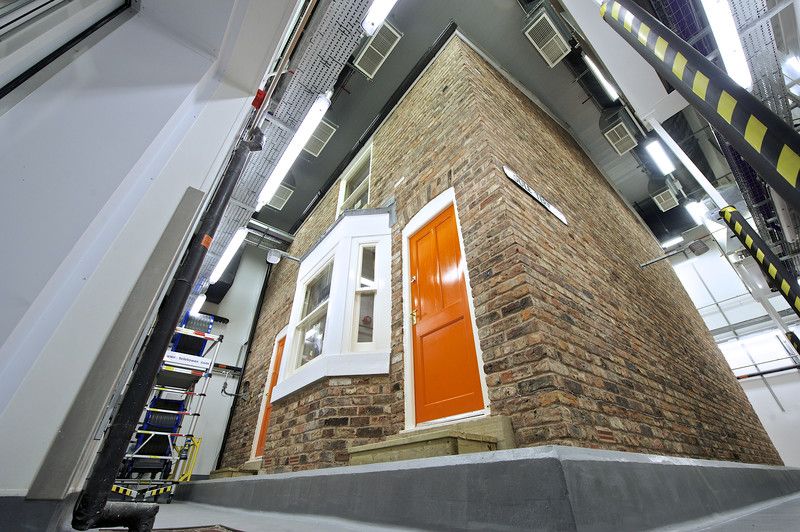
Energy House 2.0, a state-of-the-art buildings research facility worth £16M, will be constructed at the University of Salford in early 2020 with completion scheduled for spring 2021.
Planning permission for the scheme was secured back in May 2018 and the University has since procured the contractor, Bowmer & Kirkland, to complete the design and construction of the facility through funding from the European Regional Development Fund and the Office for Students.
AECOM are providing Project Management and Cost Management Services during the construction of the facility which, itself, will investigate the future of housing by analysing off-site construction, smart homes, and energy use.
Dr Richard Fitton, Technical Research Lead for Energy House Laboratories, stated: “The development of Energy House 2.0 has required considerable support from the University, industry and the Greater Manchester Combined Authority. The team are grateful for the interest and support the project has generated.”
Energy House 2.0 will have two environmental chambers able to regulate temperatures between -20C and 40C while also simulating weather conditions such as rain, wind, snow, and solar light which can replicate the environmental conditions experienced by 95%of the global population.
Professor Will Swan, Director of Energy House Laboratories, stated: “Once work is complete our facilities will be globally significant. We have undertaken significant work in the UK over the last 10 years, but these new facilities give us major opportunities to work with international partners on major global challenges.
“This facility for whole buildings testing and research and will further the development of energy efficient technologies for the built environment. From a UK perspective we are very much driven by the Industrial Strategy and will be working with partners from industry to support the delivery of a low-carbon built environment.”
Salford Energy House 1.0 has enabled key changes to the way that the UK housing stock saves energy and becomes energy efficient, driven by attempts to reduce global CO2 emissions in line with recent pledges and limitations.
If you would like to read more articles like this then please click here.






More News
- Derelict Site Turned Canalside Development Ready to Welcome First Residents
27 Aug 26
A £150m Wolverhampton Canal side development is preparing to welcome its first residents – with
- Women Leading the Future of Construction & Modular Building
18 Aug 26
Women make up around 15% of the UK construction workforce, a figure that falls further
- Homes England Backs Sunderland’s Sheepfolds Neighbourhood with £27.7 Million Investment
17 Aug 26
Homes England has confirmed a £27.7 million investment to unlock the Sheepfolds neighbourhood.