Sector - Finance & Legislation


The Future of the North: The Regeneration of Ancoats and New Islington
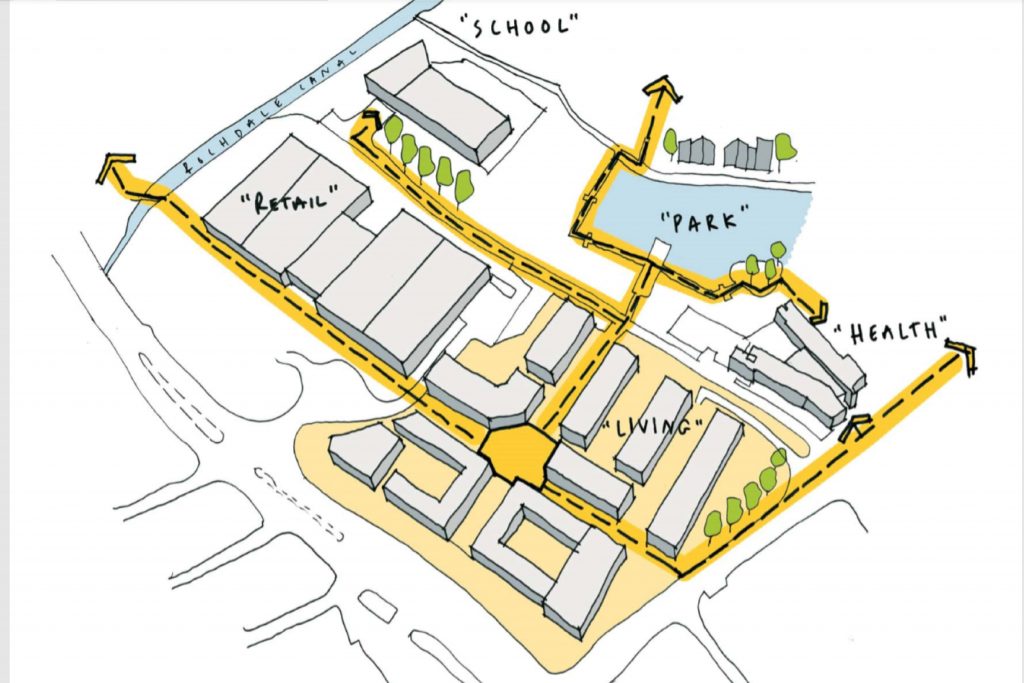
For some time now questions have been raised in relation to disparities between different regions of the United Kingdom and how each of said regions is allocated funding and approval for construction projects.
Perhaps the region which is expected to see the greatest turnaround in the not-too-distant future is the North of England, courtesy of the Northern Powerhouse agenda which the Coalition Government outlined in their 2014 Autumn Statement.
Back when the UK was governed by a coalition of the Conservative and Liberal Democrat parties, the government allocated a sum of £7Bn towards investment in the North of England, making it an economic rival of nation’s capital.
Delving further into the Northern Powerhouse agenda, a branch named the Manchester Strategy (2016-2025) can be identified wherein the Greater Manchester region was planned to receive £300M out of the Housing Investment Fund as well as consolidated transport and health and social care budgets alongside strategic planning powers.
The Manchester Strategy
With just five years remaining for the current Manchester Strategy, it can be most assuredly said that the progress which has been made so far reveals the future for the urban North.
The regeneration of the Ancoats and New Islington district in Northern Manchester has been a focal point for investment since the Manchester Strategy was first imposed in 2016, with Spinningfields, Piccadilly, and Airport City being likewise important locations.
The strategy itself sought to establish Manchester as a ‘world-class’ city, which reflects well upon the Northern Powerhouse agenda as the city lies at the heart of plans surrounding it, with a good supply of well-designed office buildings and bespoke space for the creative and scientific sectors.
Furthermore, the strategy aims to utilise brownfield site construction to create a city that is attractive to look at while also being clean, environmentally friendly, safe, and a place where people can aspire to be successful, with rife opportunities.
Part of achieving this utopian-sounding city under the Manchester Strategy involves the incorporation of the district of Ancoats and New Islington into the Manchester Northern Quarter.
This would thereby extend the city boundary and increase the overall population to approximately 50,000 people, whilst also providing the necessary space for the aforementioned creative quarter.
Ancoats and New Islington
Residential building in Ancoats and New Islington has certainly utilised the £300M which was provided to the city region following the 2014 Autumn Statement, with 20 different development companies having placed investment into the district as early on in the regeneration process as November 2016.
Some of these development companies included the likes of Nuovo Apartments, Urban Splash, and X1 Media City Limited, with some organisations with investment in the district not even falling under the label of development companies, with such organisations including the Manchester City Council and the Manchester Ship Canal Company.
At this point a grand total of 1,173 housing units had been completed in the district while a further 892 units were, in November 2016, still under construction, with a further 568 granted planning permission and 175 under consideration.
The Ancoats and New Islington district is divided into six areas of development, including: Great Ancoats Street and Oldham Road Frontage, The Ancoats Core, The Poland Street Zone, The Great Ancoats Street Frontage, The New Islington Neighbourhood, and the Ashton Canal Corridor.
Utilising the waterfront views, the modern residential buildings which now stand in Ancoats and New Islington are some of the best properties in Manchester, accompanied by mixed-use office developments, which were fitted-out in existing industrial buildings, and new schools as well.
In fact, it is not just the design and construction standards which make the North Manchester district so unique and utopian as an urban area, the collaborative community squares which operate in the district are organised in such a way that it will undoubtedly be employed city, and eventually region, wide.
Through this technique, businesses and community organisations, covering the likes of the police, councillors, and local business owners, meet up on a regular basis to discuss social schemes, public safety, and regeneration efforts, allowing the district to improve both physically and socially.
A model for the North
The regeneration of Ancoats and New Islington under the Manchester Strategy of the Northern Powerhouse should be viewed as a roaring success in light of the project’s use of brownfield sites and considering the truly mindful and collaborative way in which the district community is now run.
For that reason, once the Manchester Strategy runs it’s course and the Conservative Government allocates further funds and powers to areas of the North to bolster the Northern Powerhouse agenda, cities like Newcastle, Liverpool, Sheffield, Leeds, and Hull should all use the Mancunian district as the standard for their own regeneration schemes.
If all the cities featured under the Northern Powerhouse were to operate under the ‘Ancoats Template’, it can quite safely be said that the North would quickly become the intended economic rival of London.
If you would like to read more articles like this then please click here.






More Finance & Legislation Features
- Britain’s Builders Are Waiting 53 days to Get Paid, and Eight in Ten Are Eight Months from Collapse
24 Jun 26
Britain's construction sector is heading for a cashflow crisis.
- The Return of CIS NIL Returns and Key Changes for Contractors in 2026
17 Jun 26
Alex Seal from Markel Tax discusses the reintroduction of CIS NIL return requirements from April 202.
- One in five builders say late payments threaten their business
1 May 26
Cashflow pressures remain a major challenge for self-employed construction and building workers, according to new research.