Sector - Transport & Infrastructure


Project to Reduce Flooding to Begin June
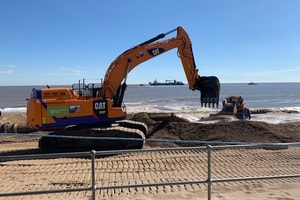
An annual scheme to replenish Lincolnshire’s beaches is set to get underway in June 2020. The scheme will help reduce the risk of flooding up and down the coast.
The Environment Agency’s beach management scheme is worth £7 million, and sees sand being dredged from the seabed and pumped onto the beach to replace levels which are lost to the sea during the winter months.
The replenishment of the sand means that the beaches – instead of hard defence like sea walls – will take the brunt of the waves’ force and energy. This also reduces the amount of damage and erosion to the hard defences. This method has helped to protect 20,000 homes and businesses, 24,500 static caravans and 35,000 hectares of land from flooding.
Deborah Campbell, East Coast Flood Risk Manager for the Environment Agency, said:
“This vital work reduces the risk of flooding to homes and businesses on the coast, and we’re delighted it is able to go ahead in line with the government’s coronavirus guidance. All our staff, contractors and partners will practice social distancing and follow Public Health England’s guidance for safe working.
And as well as helping to protect people from flooding, the work will also help maintain our beloved sandy beaches, so they will be ready to welcome back locals and tourists alike, when it’s safe for visitors to return.
Meanwhile, while people remain at home, we’d remind you to please sign up for free flood warnings at www.gov.uk/flood to help protect your families if flooding is expected.”
Over the next six weeks more than 40,000 cubic metres of sand is to be pumped back into beaches between Saltfleet and Gibraltar Point, with key areas including Trusthorpe, Mablethorpe, Ingoldmells, Trunch Lane, Wolla Bank, Chapel Six Marshes and Hutofft, with local people who may want to visit the beaches being asked to stay clear of any worksites.
The Environment Agency has been restoring sand levels on the Lincolnshire coast each year since 1994, and, while the work continues to be effective, long-term estimates suggest that the impacts of climate change will mean continuing to use sand alone as a method of managing flood risk will not be sustainable.
A new strategy has been developed, and, based on the results of a public consultation held last year, several options for managing the coast in the future have been taken forward. More information on the draft strategy can be found on our Saltfleet to Gibraltar Point and Lincolnshire beach management website.
If you would like to read more articles like this, then please click here.






More Transport & Infrastructure News
- Severn Trent to launch market engagement for up to £25bn capital design and delivery frameworks
6 Aug 26
Severn Trent Water is preparing to launch a pre-market engagement notice to initiate early engagement
- AI Mapping Tool Identifies 3,000 Small Sites With Potential for Nearly 10,000 Homes in Lewisham
5 Aug 26
PropTech pilot points toward a scalable model for unlocking small site housing delivery.
- Government Major Projects Report Shows Mixed Performance as NISTA Sharpens Oversight Tools
28 Jul 26
The National Infrastructure and Service Transformation Authority has published its Major Projects Annual Report.