News - Construction News


Synhelion fuels first construction machine with renewable diesel
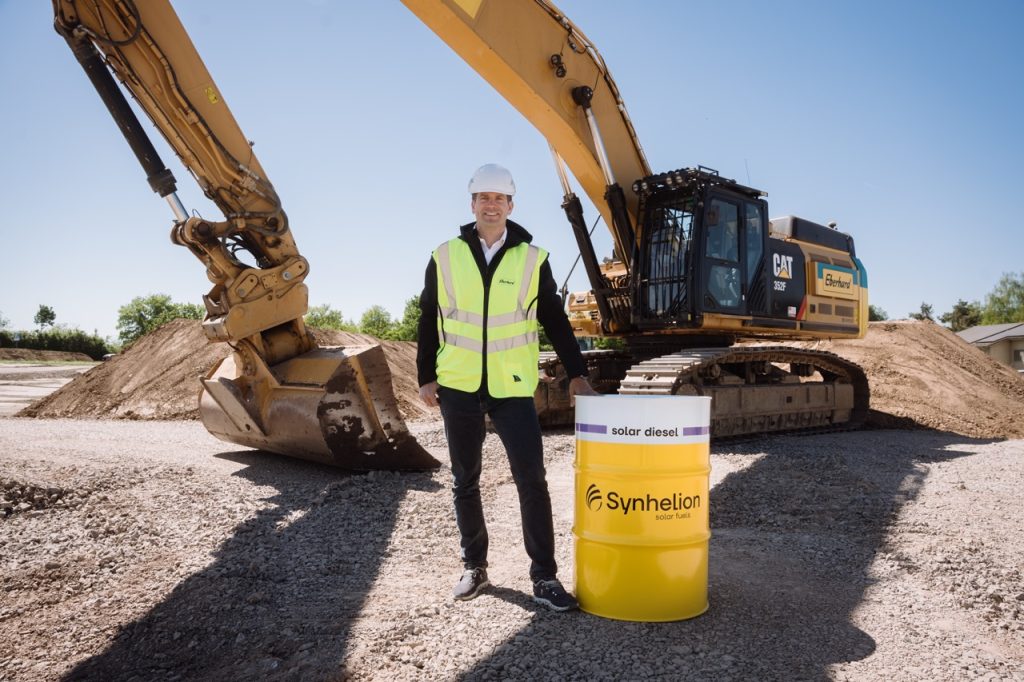
The successful deployment of renewable synthetic diesel in heavy construction machinery at the Brüttener Tunnel site in Zurich marks a significant technological advancement for the global infrastructure sector, offering a pragmatic decarbonisation pathway for machinery that remains difficult to electrify.
On 13 May 2026, the cleantech firm Synhelion fueled an excavator operated by Eberhard Bau AG using synthetic fuel produced at industrial scale at its DAWN plant in Germany, which has been operational since 2024. This application demonstrates that high-performance liquid fuels can achieve up to a 100% reduction in net carbon dioxide emissions while maintaining the operational reliability required for demanding site conditions. For UK main contractors and plant hire specialists, the primary value of this development lies in its status as a “drop-in” solution; the synthetic diesel requires no technical modifications to existing internal combustion engines, allowing firms to leverage current fleet assets while meeting increasingly stringent environmental mandates.
The shift toward synthetic fuels addresses a critical gap in the UK’s transition to net-zero construction. While electrification is viable for smaller equipment, heavy plant operating on rough terrain or in remote locations often faces significant energy density and charging infrastructure constraints. The trial in Switzerland confirms that synthetic alternatives provide the necessary power output for large-scale earthworks and tunnelling projects without compromising performance. This is particularly relevant for the UK’s major infrastructure pipeline, where decarbonising heavy machinery is becoming a core requirement of public procurement frameworks. As Eberhard Bau AG prepares to source larger volumes of this fuel starting in 2027, the move signals the transition of synthetic fuels from experimental pilot schemes to commercial-scale procurement opportunities within the European construction market.
For the wider construction supply chain, the scaling of production indicates a growing market for sustainable fuel distribution and onsite storage solutions. As production costs decrease through technological scaling, the availability of carbon-neutral liquid fuels will likely become a competitive differentiator in the bidding process for major infrastructure contracts. Suppliers and subcontractors should monitor the development of these fuel types as part of their long-term fleet management and ESG strategies. The ability to evidence a zero-carbon operational profile without the immediate, high-intensity capital expenditure of transitioning to an all-electric or hydrogen fleet presents a significant strategic advantage. As industrial-scale production expands, the UK construction market must prepare for the integration of these high-performance, low-carbon fuels into standard site logistics to ensure that the sector remains aligned with national sustainability targets.





More News
- Derelict Site Turned Canalside Development Ready to Welcome First Residents
27 Aug 26
A £150m Wolverhampton Canal side development is preparing to welcome its first residents – with
- Women Leading the Future of Construction & Modular Building
18 Aug 26
Women make up around 15% of the UK construction workforce, a figure that falls further
- Homes England Backs Sunderland’s Sheepfolds Neighbourhood with £27.7 Million Investment
17 Aug 26
Homes England has confirmed a £27.7 million investment to unlock the Sheepfolds neighbourhood.