News - Construction News


Redefining Housebuilding – Why the UK Must Increase its Focus on Outcomes
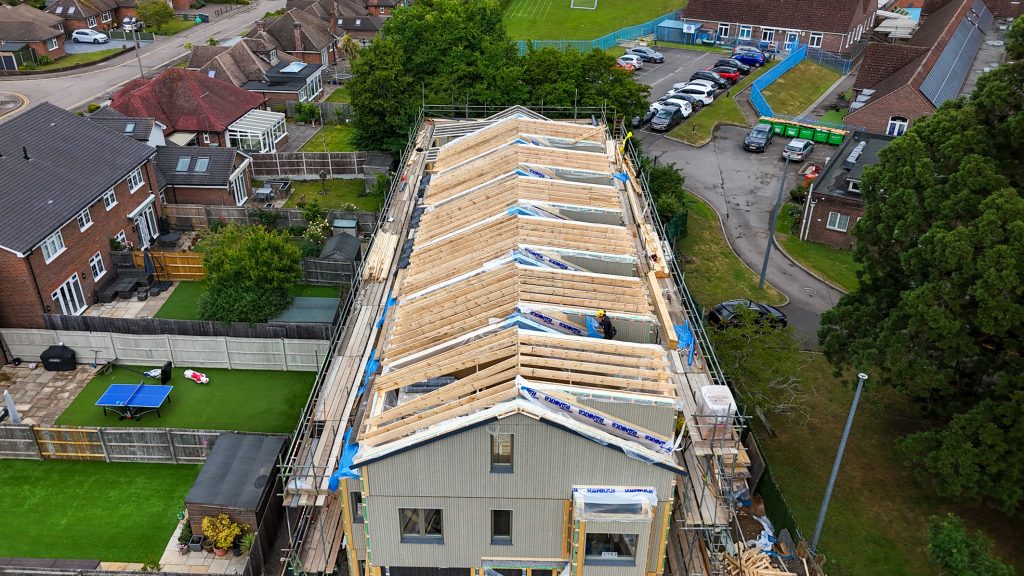
The UK housing debate too often centres on how many homes are built or needed each year. Targets dominate policy discussions, planning reform and industry commentary.
Yet an equally important question receives far less attention – what outcomes should we be delivering through the homes we build? Dr Anthony Greer, Executive Director of offsite housing specialists TALO examines the issue.

TALO Dr Anthony Greer, Founder & Executive Director – Corporate Strategy
If we step back and look at the broader picture, it is clear that housebuilding must be redefined around outcomes, such as energy performance, build quality, speed of delivery and long-term affordability for the occupier.
In particular, there is a fundamental issue that should be unacceptable in a developed economy – fuel poverty in modern housing. No new home should leave its occupants struggling to afford energy bills – whether social or private housing, owned or rented.
Without a significant shift in mindset, we risk perpetuating many of the systemic problems that already exist in the UK housebuilding sector.
Limitations of the Current Model
The UK construction industry has long been characterised by incremental change rather than systemic improvement.
Traditional housebuilding methods remain largely unchanged, despite rising material costs, skills shortages, the drive to netzero and growing expectations for better energy building performance.
Residential developers are facing mounting challenges:
- Construction costs have increased significantly in recent years
- Financing costs and interest rates remain high
- Planning delays persist.
When projects take longer to complete, the financial burden increases through extended borrowing periods and greater exposure to risk. And that makes it really difficult to unlock many sites for development.
At the same time, the housing sector faces a productivity challenge. Compared with sectors such as automotive or advanced manufacturing, construction in the UK has historically struggled to achieve meaningful productivity gains compared to other European countries.
These pressures create a cycle where higher quality, faster delivery and lower cost are often seen as mutually exclusive goals. In many discussions across the housing sector, there remains a persistent assumption that improving quality inevitably increases cost, or that building faster must compromise quality.
I firmly believe these assumptions have to be challenged.
Learnings from Other Countries
Looking internationally can provide valuable perspective. In Finland, around 70% of new homes are manufactured offsite using advanced timber superstructure technology.
The primary driver for this is climate. With winter temperatures that can fall below -50°C rising to 30+°C in the summer, homes must achieve extremely high thermal performance to ensure year-round comfort and energy efficiency.
As a result, housebuilding in Finland and Norway has evolved to prioritise fabric performance, airtightness and robust offsite manufacturing processes.
Homes are typically designed and built using a holistic ‘whole house’ approach rather than specifying components in isolation – such as a highly insulated superstructure and the energy strategy.
The outcome from this approach is housing that delivers exceptional energy performance at no cost premium – and very low or even zero energy bills.
Whilst the UK climate is different, the need for ultra-low energy homes that are built cost efficiently, is the same. The Finnish experience demonstrates that there is a proven alternative.
The Importance of a Holistic Approach
One of the key lessons from housebuilding in the Nordic countries is the importance of treating the home as a complete system rather than a collection of individual components.
Energy performance does not come from insulation or the installation of renewables alone. It depends on the integration and quality of the building fabric, ventilation if there is a high level of air tightness, energy generation, and build quality.
It then becomes possible to achieve levels of energy performance that are difficult to reach through fragmented design decisions – and most importantly, without a cost premium.
For example, a highly insulated and airtight building envelope combined with mechanical ventilation with heat recovery (MVHR) can dramatically reduce heat loss whilst maintaining healthy indoor air quality.
Equally important is the additional level of quality control achievable with offsite manufacturing. By moving key stages of construction into a factory environment – such as the installation of triple glazing, insulation, plasterboard and cladding – homes can be assembled on site in a matter of days, reducing weather-related risks, improving precision, build quality and air tightness.
Productivity and Speed
The UK’s housing shortage is often framed purely as a supply issue. But speed of delivery is also critical.
Traditional housebuilding programmes can stretch over months or even years. That extended timeline increases financing costs and delays the point at which homes become available for occupation. Put more simply, if you achieve faster ROI, housebuilders can build more homes!
Using industrialised approaches can dramatically compress the build programme. Offsite housing solutions such as TALO’s allow the completion of a watertight structure in days not months, ready for fitting out at a much earlier stage – and halving the time to occupation.
This does not mean eliminating skilled labour from UK housebuilding. On the contrary, the opportunity lies in redeploying skilled teams into more productive and safer working practices. We need to rethink how these valuable skills are used within the housebuilding process, with a clear focus on better outcomes.
Raising the Baseline Standard
The most important shift required in UK housebuilding is cultural rather than technical.
Much of the industry continues to operate around regulatory thresholds. Building Regulations define minimum requirements, and projects are typically designed to meet those standards rather than exceed them. Yet minimum compliance should not be mistaken for best practice.
If we truly want to tackle fuel poverty, improve housing quality and reduce the environmental impact of new homes, the baseline expectation must rise. New housing should not simply meet current standards – homes, regardless of tenure, should be designed with energy performance, low maintenance and occupant wellbeing at the core.
Encouragingly, consumer expectations are changing. Homebuyers and tenants are increasingly aware of energy performance, renewables and running costs. As energy prices continue to fluctuate and climate concerns grow, demand for higher-performing homes will only increase.
A Moment of Opportunity
The UK housing sector is at an important crossroads. Government targets for new homes remain ambitious, whilst sustainability goals and energy performance standards continue to evolve – although not as fast as we would like. Delays to the reform of the EPC regime have just been announced which for us adds frustration.
Meeting all of the challenges will require more than incremental improvements. It will require a willingness to rethink how homes are designed and built and to increase the level of collaboration between the developer, architects, energy consultants, housebuilders and supply chain.
Sharing a clearer focus on outcomes – energy performance, affordability, quality and speed – will provide a clearer framework for the much-needed transformation.
If the industry can align around those outcomes, we have the opportunity not only to build more homes, but to build better homes that genuinely improve people’s lives.
And most importantly, ensure future generations will never face fuel poverty again.
If you would like to read more stories like this, then please click here






More News
- Derelict Site Turned Canalside Development Ready to Welcome First Residents
27 Aug 26
A £150m Wolverhampton Canal side development is preparing to welcome its first residents – with
- Women Leading the Future of Construction & Modular Building
18 Aug 26
Women make up around 15% of the UK construction workforce, a figure that falls further
- Homes England Backs Sunderland’s Sheepfolds Neighbourhood with £27.7 Million Investment
17 Aug 26
Homes England has confirmed a £27.7 million investment to unlock the Sheepfolds neighbourhood.