Sector - Finance & Legislation


The Strive For Sustainable Homes
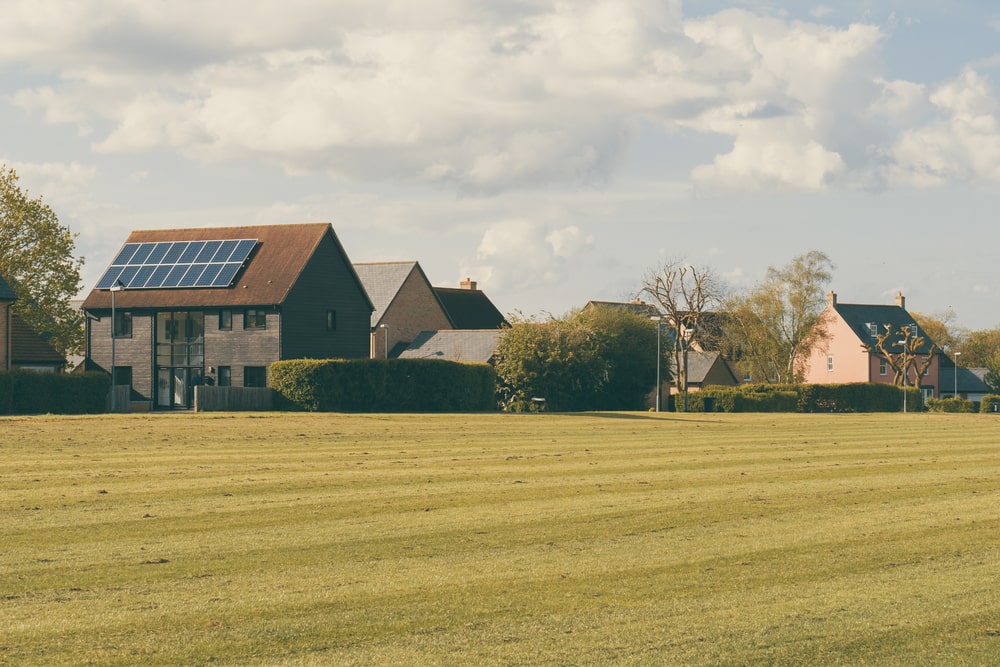
Achieving the net zero energy annual emission by 2050 is feasible and an exciting target for us all to contribute to, but it is unclear exactly how this is going to be attainable without continued investment in infrastructure, research, and development, together with consistent and regulated government policy.
Grahame Kelly is one of the Directors of Tate Consulting, an industry leading building services engineering company that provides a wide range of engineering and management consultancy services. Here Grahame speaks with us about the strategies required to tackle some of these issues to help provide more sustainable homes for the future. Also, why demanding design and construction standards are important for new buildings but crucially how there also needs to be a radical plan to deal with the existing housing stock.
Cutting Greenhouse Gases by 2050
Being the first leading economy to legally commit to achieving net-zero annual emissions of greenhouse gases by 2050 and government targets for future home standards are laudable but progress towards this has been preceded by conflicting government policies. The Code for Sustainable Homes was scrapped in 2015 along with the feed-in tariff on solar PV technologies in April 2019. To achieve the target further setbacks must be avoided.
We all also need to understand what net-zero annual emission means and the work being undertaken by the UK Green Building Council and leading Institutes to define this is helping. It may also address the apparent “disconnect” between politicians, their departments, and local planning authorities, who often feel like an obstacle to delivering forward looking, cross-policy sustainability agendas. There is a need for significant change in local planning authority approach and understanding to deliver this agenda.
New homes are energy efficient, but we must address energy consumption in existing housing stock which accounts for over 90 per cent of carbon generation. Eco-renovation in this housing stock to improve energy efficiency and address fuel poverty is essential and the government should focus on this.
Enforcing improved air-tightness and reducing glazing in buildings will help but research and development in evolving technologies is needed to achieve improved performance. Advances in material science could develop sustainable building envelope products with responsive thermal mass, allowing them to minimise heat loss when needed, or to absorb extreme heat to prevent overheating.
Passive design solutions to reduce energy demand should be the primary objective but optimal use of energy within the home and how energy is generated is also important. Using high efficiency, low energy technologies such as LED lighting and heat pumps will form a valuable part of that mix, but the critical aspect is about replacing the energy used from the most sustainable source possible.
What Will Substitute Gas Boilers?
Government plans to eradicate gas boilers by 2025 are good, but to achieve this an infrastructure that can deliver the alternatives is needed. Our electrical infrastructure is currently incapable of providing the additional electricity to drive heat pumps or other heating systems in homes across the UK or the rising demand for electric vehicle charging.
Developments in electrical battery storage technology combined with the continued increases in the use of renewable sources to supply the national grid will be pivotal. It is feasible that the green electricity generated could heat homes via domestic scale batteries and be the only energy source in homes.
Surplus grid power could be stored in off-peak periods along with locally generated power from solar panels, etc., helping to address fluctuations in power output from renewable sources. More resilience in the grid to harness the larger amounts of power generated from large scale wind and solar farms in peak periods will be needed, we have already seen an increase in the construction of large scale battery storage facilities (up to 50MW) and this is forecast to multiply in coming years.
However, there still needs to be an increase in the amount of electricity generated from renewables. The government “deal” with the wind industry to ensure that 30 per cent of electricity comes from offshore wind by 2030 will help. The ability of other green sources such as nuclear and gas fired power stations with carbon capture to keep pace is far from certain though, and further investment in wind and solar generation capacity and increased energy storage facilities may be needed.
Trials Using Blended Hydrogen Which Could Replace Existing Gas Boilers
Hydrogen boilers or fuel cells to deliver the micro combined heat and power to homes could help, provided that sufficient volumes of hydrogen can be generated, for example by using electrolysis powered from renewable sources. Studies have concluded it is feasible to convert the existing gas distribution network for hydrogen transmission.
This would probably be a transitional process and Tate Consulting have met with the BOC research and development team who are trialling methods to use blended hydrogen in the gas networks. This would enable domestic gas boilers to be replaced with a hydrogen powered equivalent with minimal disruption to existing housing stock.
Similarly, Public Heat Networks (PHN’s) offer a means of replacing existing gas boilers with heat exchangers connected to the PHN. If the networks are served by a low carbon energy source, they could have an important role in city centres and high density build environments. Water source heat pumps using rivers as the energy source have challenges but given that most UK cities are built on rivers there is potential to harness the benefits of this technology to provide the heat source for PHN’s and there are already several UK schemes in construction or in design.
The solutions to the net zero annual energy target are clearly available but the investment required to meet the challenge needs to be made as a matter of urgency.
If you would like to read more articles like this then please click here






More Finance & Legislation Features
- Britain’s Builders Are Waiting 53 days to Get Paid, and Eight in Ten Are Eight Months from Collapse
24 Jun 26
Britain's construction sector is heading for a cashflow crisis.
- The Return of CIS NIL Returns and Key Changes for Contractors in 2026
17 Jun 26
Alex Seal from Markel Tax discusses the reintroduction of CIS NIL return requirements from April 202.
- One in five builders say late payments threaten their business
1 May 26
Cashflow pressures remain a major challenge for self-employed construction and building workers, according to new research.